 |
Role of Trading Psychology
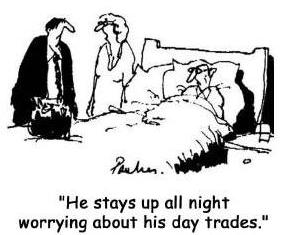
Every person entering the market knows that, to make money, all he has to do is buy at low price and sell at high price. Trading is that simple. Yes, indeed. Anyone should then be able to make money without difficulty. Yet, the majority loses money and vanishes pledging never to enter the market again in the life time. So, what goes wrong? The moment you enter the market with your own money your perception changes – thus bringing trading psychology in to picture. When you have just made your first trade you begin to feel indecisive about when to take profit, or how to limit losses. You also discover that the elements of greed and fear are trying to color your judgment and actions. Role of Fear and GreedThe only thing the market offers you is the uncertainties – in fact, several of them together and you must act correctly and promptly. Your action or inaction can cost you dearly. For instance, take this situation: the moment you enter a trade it goes against you and you are suddenly face to face with a situation where every passing moment is depleting your trading capital. Suddenly you are gripped with fear and if the market movement is too strong (against you) you are almost paralyzed into inaction. You are too afraid to take the loss and if you don’t you are getting into a bigger loss – a highly distressful situation. It is not that only losing trades are the problems. Suppose the trade becomes profitable and you are getting happier seeing it become more and more profitable with every passing second. You are brimming with confidence and are convinced that you are really very intelligent and only morons lose money. Now the market halts and begins to reverse and you get confused and then worried because your profits are decreasing. Soon the euphoria ends completely and you are almost back to your buying price. Now, you are feel depressed having seen all your profits vanish in thin air before your eyes in just last few minutes. You are remorseful - why you didn't sell when there was good profit. Now suppose you had sold at some good profit but even after you exited, the market continued its course with stronger impetus. As you stare at the trading screen you are getting regretful due to greed – you should have waited longer. What if you had not exited – you would then be sitting on a “wind fall” profit, as they say in the trading community when a trade becomes too profitable defying sensible logic. How to reduce emotional interference
The ideal way to beat emotional interference is to trade strictly according to a well written trading strategy that includes a trade plan and risk reduction policies. If you can practice trading according to your plan just for a few weeks, you will begin to see rewards. Firstly, you will be able to expose the grey areas of your plan and fine-tune it. Secondly, you will develop confidence in your system and feel comfortable trading within its boundary. Thirdly, you will develop consistency and discipline – the two vital ingredients for success – while practicing and sticking to your plan. If you want to be more methodical you may like to first mock trade with your plan. The real point is, the more you practice with your trade plan – whether mock or real – the better professional trader you are going to become much sooner than you can imagine. Market is a beastThis is the true nature of the market – you can not predict its vagaries (particularly in the short duration in which day traders operate) and you have to respect it. You have to learn to protect yourself from its unpredictability which is the occupational hazard, if you wish to call it so. There are simple yet well known survival skills for you to master only then you can think of making money in the long run. If you unnecessarily mess with it, you are bound to get hurt. Adapt to the Process of TradingThe only safe and sane way to familiarize yourself with the potential dangers of trading is to start slowly with small capital but with sufficient time. Mock trading is still safer if it suits you. Allow at least 2 – 3 months for the “warm up” period. There will be fear of unknown in the beginning and as you come across the same situation repeatedly over a period of time, you will begin to feel more comfortable with your decisions. Moreover, you can fine tune your entry and exit procedures and risk management techniques giving you more confidence in the way you trade. When you have confidence in your trade management system you can take all actions with ease without caring for distracting thoughts and emotions that hijack your best intentions. This is a simple common sense approach which any average person can follow. |
